Statistically significant gains in validated sleep metric (Pittsburgh Sleep Quality Index, PSQI) and diary measures reported with pillow-embedded technology
SINGAPORE, 8 September 2025. Cambridge Sleep Sciences presented new pilot data at the World Sleep Congress 2025, the world's leading international meeting for sleep and circadian science.
The independently run UK observational pilot (n=20) indicated that the company's SleepEngine™ audio neuromodulation approach delivered statistically significant and notable improvements in sleep quality among adults with persistent insomnia. The gold-standard measure of sleep quality, the Pittsburgh Sleep Quality Index (PSQI), improved at twelve weeks and persisted eight weeks after device withdrawal.
The PSQI is a scale of a series of measures, scored by questionnaire to a maximum of 21, where a lower number equates to better sleep. In this prospective study, conducted in primary care with nightly use over twelve weeks and an eight-week washout, a mean PSQI of 11.15 was recorded at baseline, falling to 7.21 at end of treatment (p<0.05) and 5.84 at the end of washout (p<0.05). Overall change from week zero to week twenty was also highly significant. Diary metrics also improved: median time to fall asleep reduced from 0.96 to 0.58 hours (p<0.05), and time awake during the night fell from 1.18 to 0.33 hours (p<0.05). Night-time awakenings trended lower (p=0.056), and self-rated sleep scores rose from 2.64 to 3.86 (p<0.05). No adverse events were reported.
"Presenting our findings at World Sleep 2025 underscores how carefully sequenced, low-frequency audio may support better sleep without medication," said Dr Chris Dickson, Chairman of Cambridge Sleep Sciences. "This evidence marks a promising step for people living with poor sleep."
The SleepEngine™ device delivers rhythmic pulsed sounds, masked by familiar soundscapes, for six to eight hours during sleep. Following positive user feedback on comfort and ease of use, the technology has been integrated into a pillow to avoid disturbing a bed partner.
"In primary care, sleep complaints are one of the most common issues doctors face," said Professor Jonathan Sackier, Clinical Advisor, Cambridge Sleep Sciences. "An approach that is easy to adopt at home and shows sustained benefits after use is exactly the kind of solution that warrants further study."
Event details: World Sleep 2025, 5–10 September, Suntec Singapore Convention & Exhibition Centre. Organised by the World Sleep Society.
Download the study poster (PDF) | Press enquiries: hello@cambridgesleepsciences.com
ENDS
About Cambridge Sleep Sciences
Cambridge Sleep Sciences is a sleep technology company which blends science, sound and innovation to improve the way the world sleeps. Its patented SleepEngine™ technology supports natural sleep by re-training the brain to follow healthy sleep patterns, enhancing cognitive and physiological recovery.
The SleepEngine™ technology has been developed and refined over 15 years by a team of researchers, scientists, sound engineers and medical experts. This unique technology produces sounds which emulate the waves created by the brain during sleep cycles. These SleepEngine™ Sounds guide the user's brain through the sequence of healthy sleep cycles, helping them fall asleep and achieve the quality of sleep they need in a consistent and optimal way.
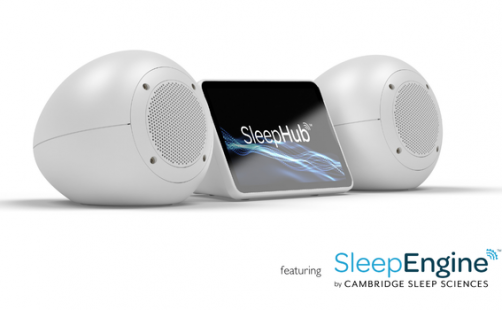
Following a first clinical trial in which 92% of participants (with at least 3 months insomnia) saw an improvement in their sleep, the SleepEngine™ technology launched to the market through its pioneering SleepHub® product, an electronic bedside sleep aid which has achieved sales worldwide. A second consumer product, the SleepEngine™ Smart Pillow has just been launched and is expected to emulate the success of SleepHub®.
Find out more at cambridgesleepsciences.com and LinkedIn.
Enquiries
hello@cambridgesleepsciences.com